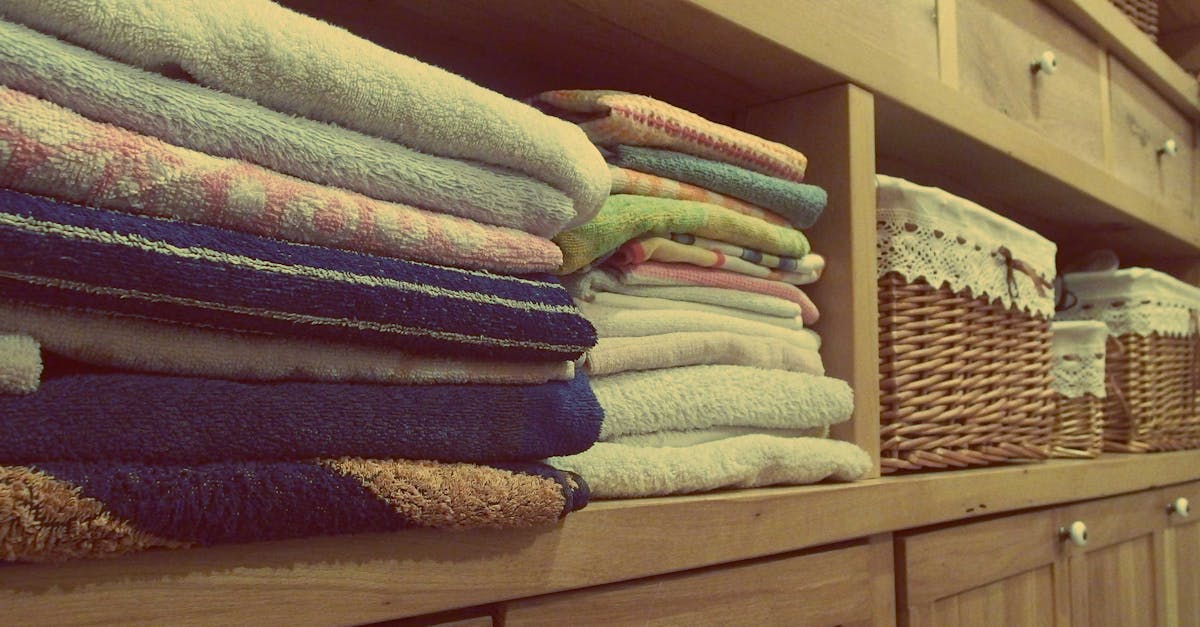
The linen closet: often a hidden battlefield where good intentions go to die. I’ve seen countless clients, myself included, grapple with overflowing shelves, mismatched sets, and a general sense of textile chaos. You open the door, and a cascade of towels threatens to engulf you, or you’re digging through a mountain of sheets only to find they’re not the size you need. It’s a space that seems to accumulate fabric without any real purpose or strategy, leaving us feeling overwhelmed rather than organized. The real problem isn’t just too much stuff; it’s too much unnecessary stuff that actively complicates our daily routines.
Most people approach the linen closet with a ‘just in case’ mentality. ‘What if guests come? What if a set gets ruined? What if the laundry machine breaks?’ This thinking, while well-meaning, leads to an accumulation of items far beyond what’s practical or even usable. My experience has shown that the true path to a tidy, functional linen closet isn’t about fitting more in, but about thoughtfully paring down to what you genuinely use and need. It’s about rejecting the notion that more equals better, and instead embracing a strategic minimalism that simplifies your life and reduces laundry stress. What changed everything for me, and for my clients, was realizing that the ideal number of linens is far less than what most homes actually store. It’s not about deprivation; it’s about efficiency and peace.
Key Takeaways
- Aim for two to three sets of sheets per bed, prioritizing quality and comfort over quantity.
- Limit bath towels to four per person, plus a small contingency for guests, focusing on absorbency and durability.
- Designate one specific spot for overflow or seasonal linens rather than letting them invade daily-use areas.
- Regularly assess the condition of your linens, immediately discarding or repurposing anything worn, stained, or unraveling.
The Two-to-Three Rule for Sheets Per Bed
When I first started helping clients declutter their linen closets, the most common discovery was an abundance of sheet sets. Often, there were five, six, or even more sets per bed, many of which were rarely used, or worse, didn’t even fit the current mattress. The mistake I see most often is keeping old, uncomfortable, or ill-fitting sheets because they’re ‘still good’ or ‘might be useful someday.’ This creates visual clutter and decision fatigue every time you change the bed. In my experience, two to three sets of sheets per bed is the absolute sweet spot. This might sound surprisingly low to some, but it’s a number rooted in practical rotation and maintenance.
Here’s the breakdown:
- One set on the bed: This is your primary set, in active use.
- One set in the laundry: This set is dirty, waiting to be washed, or in the process of being cleaned.
- One spare set in the closet: This is your backup, ready to go when the laundry cycle dictates, or for immediate changes due to spills or accidents.
Why this number? It ensures you always have a fresh set available without needing to do laundry every single day. If you wash sheets weekly, as most households do, this rotation works perfectly. Having a third set provides a buffer against unforeseen circumstances or if you prefer to change sheets more frequently. For instance, if you have a bed that gets particularly heavy use, like a child’s bed, the third set is invaluable. Anything beyond three sets typically sits untouched, taking up valuable space, collecting dust, and simply contributing to the clutter. The only exception I advise is for specialty mattresses, like an extra-deep queen, where finding replacement sheets can be a challenge. In such cases, having a single extra backup is acceptable, but the core ‘two-to-three’ philosophy still applies.
What about seasonality? I always recommend using quality, breathable sheets that work year-round. Investing in two high-quality, comfortable sets (like percale cotton for breathability or sateen for softness) is far better than having a dozen cheap, uncomfortable ones. If you absolutely insist on flannel for winter, then make that one of your three sets, and simply rotate it in seasonally. This intentional reduction forces you to prioritize comfort and quality, which ultimately leads to a better night’s sleep and a more streamlined linen closet.
Four Towels Per Person is a Realistic Limit
Towels are another major culprit in linen closet overload. People often collect promotional towels, old beach towels, or sets gifted over the years, leading to a sprawling collection that far exceeds actual need. I’ve often found closets stuffed with a rainbow of towels, some threadbare, others still crisp from a long-forgotten gift, none of them truly working together. The common misconception is that more towels mean more readiness for anything. However, it usually just means more laundry, more clutter, and a less enjoyable experience when you actually do use a towel.
My guideline, honed over years of decluttering, is to limit bath towels to four per person. This number mirrors the sheet rotation logic:
- One towel in use: Hanging in the bathroom, actively being used after showering.
- One towel in the laundry: This is the used towel, waiting for the next wash cycle.
- Two spare towels in the closet: These are your clean backups, ensuring you always have a fresh one available, and offering flexibility for daily changes if desired without immediate laundry pressure.
This allocation ensures each person in the household has a fresh towel when needed, without stockpiling an unnecessary amount. What about guests? If you frequently host overnight guests, add one or two dedicated guest sets (bath towel, hand towel, washcloth) to your total. These should be clearly marked or stored separately from daily-use towels to prevent them from being absorbed into regular rotation. This keeps your guest supply distinct and helps you maintain your per-person limits.
Beyond bath towels, you’ll also need to consider hand towels and washcloths. For these, I recommend:
- Hand towels: Two per bathroom, plus one or two spares. This allows for rotation and easy replacement when one is dirty.
- Washcloths: Two to three per person, kept with their personal toiletries or within easy reach. These wear out faster, so having a few on hand is sensible.
Regularly assess the condition of all your towels. Any towel that is severely frayed, stained beyond redemption, or has lost its absorbency should be immediately removed. These aren’t serving you; they’re just taking up space. Donate usable but unwanted towels to animal shelters, or cut truly unusable ones into rags for cleaning. This systematic approach transforms a chaotic pile into a functional, inviting stack.
Designate One Spot for Overflow, Not the Entire Closet
One of the most insidious ways linen closets get cluttered is by becoming the catch-all for anything textile-related that doesn’t immediately have a home. Holiday table linens, extra blankets for chilly nights, an old sleeping bag from a forgotten camping trip – all these items, while potentially useful, can quickly overwhelm a space intended for daily essentials. The mistake I frequently see is allowing these ‘overflow’ items to merge with the active rotation, leading to a constant reshuffling of stacks to find what’s needed. What changed everything for my clients was creating a clear boundary: one designated spot, and only one, for items not in regular, weekly rotation.
This ‘overflow’ spot might be:
- A single bin or basket on the top shelf of the linen closet.
- A dedicated drawer in a dresser elsewhere in the home.
- A storage container in a less-accessed area, like a basement, attic, or under a bed.
The key is that this space is finite. If the bin is full, nothing else goes in. This forces a ruthless assessment of what truly merits ‘overflow’ status. If you have five extra throws but only space for two, you must make choices. This prevents the primary linen closet from becoming a storage unit for every textile possibility. For example, my rule of thumb for seasonal items like holiday tablecloths or heavier winter throws is that they only earn a spot if they’re used every single season. If you haven’t used that festive placemat set in two consecutive holidays, it’s time to let it go. It’s not about the item’s potential; it’s about its proven utility within your actual lifestyle.
This principle also extends to items like extra blankets. How many do you actually need beyond what’s on beds or readily available in living areas? Most households find that one or two truly nice spare blankets are sufficient for guest use or an extra layer on a cold night. Anything more than that often becomes a dusty burden. Consolidate. If you have multiple blankets, choose the best ones and let the rest go. This focused approach ensures that your primary linen closet remains an area of calm and accessibility, not a textile labyrinth.
The “One In, One Out” Rule for Long-Term Maintenance
Decluttering is not a one-time event; it’s a continuous process, particularly for high-traffic areas like the linen closet. Without an ongoing strategy, the carefully curated stacks of towels and sheets can quickly revert to their former chaotic state. The mistake many people make is treating decluttering as a project with a start and end date, rather than integrating it into their daily or weekly routines. My advice for long-term maintenance is simple but effective: implement a strict ‘one in, one out’ rule.
This means:
- If you buy a new set of sheets, an old set must be removed. This forces you to evaluate which set is the least functional, most worn, or simply no longer sparks joy. It prevents the accumulation cycle from restarting. For instance, if you acquire a beautiful new set of linen sheets, perhaps an older, less comfortable cotton set gets repurposed into cleaning rags or donated.
- If you get a new set of towels as a gift, an existing set, or individual towels, must leave your closet. This can be challenging with sentimental items, but the rule applies to prevent overflow. I often encourage clients to take a photo of sentimental items before donating them, allowing them to keep the memory without sacrificing valuable space.
Beyond the ‘one in, one out’ rule, it’s crucial to perform a mini-audit of your linen closet every three to six months. This doesn’t need to be an arduous task. Simply open the door and do a quick visual scan:
- Are there any items that have migrated from the ‘overflow’ bin into daily use areas? Return them or reassess their place.
- Are any sheets or towels showing significant wear and tear? These are ripe for replacement and should be removed.
- Is anything taking up space that you haven’t used in six months? Reconsider its necessity.
This continuous, low-effort maintenance prevents small accumulations from becoming overwhelming projects down the line. It also keeps your inventory current with your actual household needs, ensuring that every item in your linen closet serves a purpose and is in good condition. The goal isn’t perfection; it’s sustainable functionality. By integrating these simple habits, your linen closet will remain a well-organized, stress-free space, rather than a forgotten textile graveyard.
Frequently Asked Questions
How often should I declutter my linen closet?
I recommend a full declutter and reorganization once a year, preferably before a major seasonal shift or during a spring cleaning. However, quick mini-audits every three to six months are crucial for ongoing maintenance. This keeps small accumulations from becoming overwhelming projects.
What should I do with old towels and sheets that are too worn to donate?
Don’t just throw them away! Truly worn, stained, or ripped linens can be cut into cleaning rags for household use, garage cleanups, or even used for craft projects. Many animal shelters also accept old towels for bedding, even if they’re past their prime for human use. Always check with your local shelter first for their specific donation guidelines.
How do I store my spare sheets and towels to maximize space?
For sheets, folding them into neat, uniform rectangles and storing them inside one of their matching pillowcases is a game-changer. This keeps sets together and creates tidy, stackable bundles. For towels, a tight rolling method can save more space than folding, especially for smaller shelves. Store items vertically when possible, using shelf dividers to keep stacks from toppling.
Is it okay to keep sentimental linens, even if I don’t use them?
Absolutely, within reason. If a linen holds deep sentimental value (like a cherished baby blanket or a hand-embroidered tablecloth from a grandparent), it’s fine to keep it. However, these items should be stored outside the primary linen closet, in a dedicated memory box or container, to prevent them from contributing to daily clutter. The linen closet is for functional items; memories belong in a space reserved for keepsakes.
What if I have a small linen closet and can’t fit even the recommended amount?
If space is severely limited, prioritize. Reduce your sheet sets to just two per bed and towels to three per person. Consider storing seasonal items or guest linens in alternative locations, such as under-bed storage containers or vacuum-seal bags in a spare closet. Vertical storage solutions, like over-the-door organizers, can also provide extra space for smaller items like washcloths or hand towels. The goal is to make the space work for you, not against you.
The Path to a Truly Tidy Linen Closet
Transforming your linen closet from a chaotic textile repository to a serene, functional space is entirely within reach. It’s not about achieving a magazine-perfect look that’s impossible to maintain, but about creating a system that genuinely supports your daily life. By adopting the ‘two-to-three’ rule for sheets, the ‘four per person’ rule for towels, designating a clear overflow spot, and maintaining a ‘one in, one out’ policy, you’re not just decluttering; you’re cultivating a sense of calm and efficiency.
This isn’t just about linens; it’s about respecting your space and your time. Imagine opening your linen closet and effortlessly finding exactly what you need, every time. No more rummaging, no more avalanches, just organized simplicity. Start with one category – perhaps your bath towels – and work your way through. You’ll be surprised at the sense of accomplishment and the lasting impact on your daily routine.